
Pelerine
Unknown Artist
first half 19th century
Medium
Applied
Dimensions
L. 40 x W. 11 1/2 inches 101.6 x 29.2 cm
Classification
Textiles-Laces
Culture
Belgian, Brussels
Department
European Sculpture and Decorative Arts
Museum
Metropolitan Museum of Art, New York, NY
Credit
Gift of Mrs. Edmund L. Baylies, 1926
Accession Number
26.18.2
Rights
Public Domain
Art Historical Context
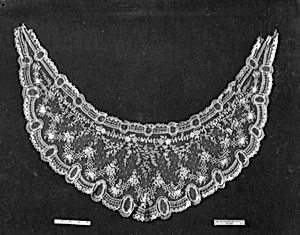
Step into the elegant world of 19th fashion with *Pelerine*, a delicate lace accessory crafted in Brussels, Belgium, during the first of the 1800s. Measuring 40 by 11½ inches (101.6 x 29.2 cm), this from the Metropolitan Museum of Art's European Sculpture and Decorative collection exemplifies the exquisite textiles-laces classification. Donated in 1926 by Mrs. Edmund L. Baylies it served as a shoulder capelet or shawl, a popular garment known as a pelerine that draped gracefully over bodices, adding a touch of refined femininity to women's attire. Brussels was renowned as a global hub for lace production in the early 19th century, where skilled artisans produced intricate "applied" lace—likely featuring motifs appliquéd or layered for depth and texture. This medium highlighted the technical mastery of needle and bobbin techniques, creating lightweight yet opulent fabrics that symbolized wealth and sophistication amid the Romantic era's emphasis on ornamentation. Pelerines like this one bridged everyday elegance with high fashion, often adorning empire-waist dresses. Today, *Pelerine* offers a glimpse into Belgium's cultural legacy in decorative arts, preserving the artistry of anonymous makers whose work influenced European wardrobes. Its preservation at the Met invites us to appreciate how textiles wove stories of craftsmanship and style into history.