
Pendant
Unknown Artist
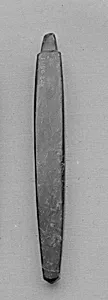
Medium
Jade
Dimensions
H. 3 1/2 in. (8.9 cm); Diam. 7/16 in. (1.1 cm)
Classification
Jade
Culture & Period
China · Han dynasty (206 B.C.–A.D. 220)
Department
Asian Art
Museum
Metropolitan Museum of Art, New York, NY
Credit
Gift of Samuel T. Peters, 1911
Accession Number
11.190.248
Rights
Public Domain
Art Historical Context
This exquisite jade pendant, crafted during China's Han dynasty (206 B.CA.D. 220), exemplifies the era's reverence for jade as a material of profound spiritual and aesthetic value. Measuring just 3½ inches in height and less than half an inch in diameter, its slender form suggests it was designed for personal adornment—perhaps worn as a necklace or attached to clothing or belts. The Han period marked a golden age for jade carving, where artisans transformed the stone's natural translucency and durability into symbols of purity, immortality, and imperial virtue, often used in rituals, burials, and elite jewelry. Jade's cultural significance in ancient China cannot be overstated; it was believed to possess protective qualities and connect the earthly realm to the heavens. Han craftsmen employed precise techniques like incision and polishing to highlight the stone's subtle green hues and smooth texture, creating pieces that balanced functionality with artistry. Though the exact design remains unrecorded here, such pendants were common accessories among the nobility, reflecting social status and cosmological beliefs. Generously donated to the Metropolitan Museum of Art in 1911 by Samuel T. Peters, this delicate artifact invites us to ponder the daily elegance of Han life, bridging over two millennia of artistry in the Asian Art collection.