
Weapon
Unknown Artist
Medium
Nephrite, spinach-green
Dimensions
H. 10 7/8 in. (27.6 cm); W. 1 7/16 in. (3.7 cm); D. 1 in. (2.5 cm)
Classification
Jade
Culture
Canada (British Columbia)
Department
Asian Art
Museum
Metropolitan Museum of Art, New York, NY
Credit
Gift of Heber R. Bishop, 1902
Accession Number
02.18.295
Rights
Public Domain
Art Historical Context
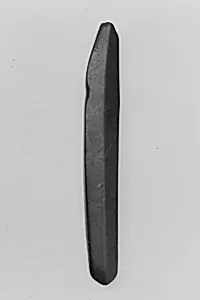
This striking jade weapon, carved from lustrous spinach-green nephrite, hails from British Columbia, Canada, and exemplifies the masterful craftsmanship of Indigenous Northwest Coast cultures. Measuring about 11 inches long and elegantly slender, its form suggests a dagger or ceremonial blade, honed from one of the toughest materials known—nephrite jade, sourced from local deposits in the region. The stone's vibrant green hue, evoking fresh spring foliage, highlights the artist's skill in shaping such a resilient medium without metal tools, likely using abrasion techniques passed down through generations. In Northwest Coast societies, nephrite jade held profound cultural value, symbolizing strength, prestige, and spiritual power. Weapons like this were not merely functional but often served as status symbols for chiefs or warriors, used in potlatch ceremonies or as emblems of authority. Though the artist remains unknown and the exact date lost to time, its inclusion in the Metropolitan Museum of Art's Asian Art collection—thanks to collector Heber R. Bishop's 1902 gift—underscores jade's cross-cultural allure, bridging Indigenous North American traditions with global appreciation for this "stone of heaven." Today, this artifact invites us to reflect on the ingenuity of pre-contact Indigenous technologies and the enduring beauty of natural materials transformed by human hands.