
Pendant
Unknown Artist
19th century
Medium
Nephrite, dark-green
Dimensions
H. 1 11/16 in. (4.3 cm); W. 11/16 in. (1.7 cm); D. 3/16 in. (0.4 cm)
Classification
Jade
Culture
New Zealand
Department
Asian Art
Museum
Metropolitan Museum of Art, New York, NY
Credit
Gift of Heber R. Bishop, 1902
Accession Number
02.18.812
Rights
Public Domain
Art Historical Context
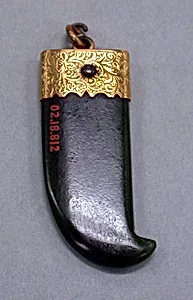
This delicate pendant, carved from lustrous dark-green nephrite in 19th-century Zealand, showcases the masterful craftsmanship of Maori artisans. Measuring a modest 1⅝ inches high, ⅝ inch wide, and just ¼ inch deep, its petite scale made it ideal for personal adornment, suspended from a neck cord as a treasured heirloom. In Maori culture, nephrite—known as *pounamu* or greenstone—was revered as a *taonga* (treasure) sourced from sacred South Island riverbeds. These pendants often embodied spiritual protection, ancestral connections, and social status, carved using traditional techniques like abrasion with sandstone and polishing with leaves or sharkskin to reveal the stone's hypnotic depth and translucency. The unknown artist's skill in shaping this resilient material highlights a living tradition blending utility and symbolism. Acquired as a gift from collector Heber R. Bishop in 1902, this piece in the Metropolitan Museum of Art's Asian Art collection bridges Oceanic artistry with global appreciation, inviting us to ponder the enduring allure of New Zealand's jade legacy.