
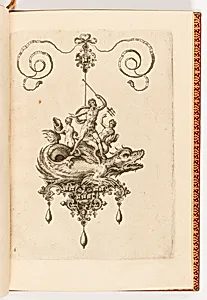
Pendant Design
Medium
ornament
Classification
ornament
Department
Smithsonian Collection
Museum
Smithsonian American Art Museum
Credit
Purchased for the Museum by the Advisory Council
Accession Number
1921-6-469-16
Rights
Public Domain
About this artwork
Research in Progress
Art Historical Context
Hans Collaert the Elder a prominent Flemish engraver active in Antwerp during the late Northern Renaissance (ca. 0–1581), this *Pendant Design* in 2, just after his death—likely produced under his workshop's influence. As part of the Smithsonian American Art's collection of ornaments, purchased by the Advisory Council, this exemplifies the intricate pattern books engravers like Collaert supplied to goldsmiths and jewelers These designs bridged art and craft, turning printed motifs into luxurious wearable treasures. In 16th-century Flanders, a hub of trade and artistic innovation, pendants symbolized wealth and status, often featuring elaborate scrolls, flora, or mythological elements rendered in fine engraving techniques. Collaert's Mannerist style, with its dynamic lines and dense detailing, reflects the era's fusion of Italian Renaissance elegance and Northern precision, making his prints essential tools for artisans crafting high-end jewelry for Europe's elite. Though research continues, this piece highlights the collaborative world of Renaissance design, where engravings democratized opulent styles while preserving technical mastery for posterity. A window into Flemish ornamental artistry! (198 words)