
Pendant, vase
Unknown Artist
4th–5th century
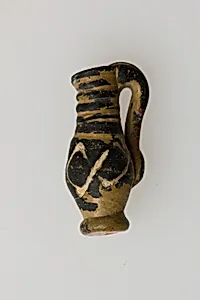
Medium
Glass
Dimensions
1 3/16 × 9/16 × 7/16 in. (3 × 1.5 × 1.1 cm)
Classification
Glass
Culture
Egyptian possibly
Department
Medieval Art
Museum
Metropolitan Museum of Art, New York, NY
Credit
Gift of Helen Miller Gould, 1910
Accession Number
10.130.996
Rights
Public Domain
Tags
About this artwork
This glass work by Unknown Artist, titled 'Pendant, vase' and created 4th–5th century, represents an important example of artistic production from this period. Unknown Artist's practice contributed to the broader artistic traditions of the time, demonstrating the technical skills and aesthetic sensibilities characteristic of Medieval Art artworks in museum collections. The piece reflects the cultural and artistic values of its era, serving as a document of historical visual culture. Further dedi...
Art Historical Context
This delicate glass pendant, shaped like a tiny vase and measuring just over an inch tall, dates to the 4th–5th century and likely originates from Egypt. Created during the late Roman and early Byzantine periods, such objects reflect the sophisticated glassmaking traditions of the Eastern Mediterranean. Egypt was renowned for its glass workshops, where artisans produced both practical vessels and ornamental items using techniques like free-blowing and molding that allowed for intricate, lightweight forms. As a pendant, this piece probably served both decorative and functional purposes, perhaps worn as jewelry or used to hold small amounts of perfume, oil, or symbolic substances. Its classification within the Metropolitan Museum’s Medieval Art collection highlights how everyday and devotional objects from this era bridged ancient craftsmanship with emerging medieval aesthetics. The translucent material and compact scale demonstrate the technical skill required to shape molten glass into wearable art, preserving a sense of intimacy and portability across centuries. Donated to the museum in 1910 by Helen Miller Gould, this work offers visitors a tangible connection to the daily lives and artistic ingenuity of late antique Egyptian culture.