
Vase Pendant
Unknown Artist
4th–5th century
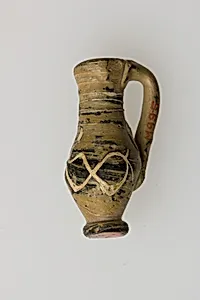
Medium
Glass
Dimensions
1 3/16 × 5/8 × 1/2 in. (3 × 1.6 × 1.2 cm)
Classification
Glass
Culture
Egyptian possibly
Department
Medieval Art
Museum
Metropolitan Museum of Art, New York, NY
Credit
Gift of Helen Miller Gould, 1910
Accession Number
10.130.995
Rights
Public Domain
Tags
Art Historical Context
This delicate glass vase pendant, crafted in the 4th or 5th century, offers a charming glimpse into the jewelry traditions of late antiquity. Measuring just over an inch tall, the tiny vessel was likely designed to be worn as personal adornment, perhaps suspended from a chain or cord. Its possible Egyptian origin places it within a region renowned for glassmaking expertise that stretched back centuries, where artisans transformed molten glass into intricate, miniature forms. Glass held special significance in this era, valued for its luminous quality and versatility. Techniques such as molding or free-blowing allowed makers to create lightweight, portable objects like this one, blending utility with beauty. Though its exact purpose remains a mystery, vase-shaped pendants often evoked themes of containment and precious contents, suggesting they may have held symbolic or protective meaning for their owners. Housed in the Metropolitan Museum’s Department of Medieval Art, the piece reflects the cultural exchanges across the eastern Mediterranean during the transition from Roman to early Byzantine times. Donated in 1910 by Helen Miller Gould, it continues to enchant visitors with its quiet elegance and the enduring appeal of ancient craftsmanship.