
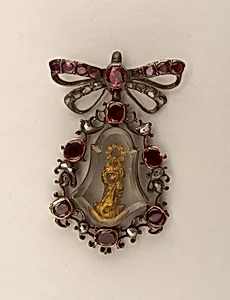
Pendant with Madonna
19th century
Classification
jewelry
Department
Smithsonian Collection
Museum
Smithsonian American Art Museum
Credit
Gift of Eugen L. Garbaty
Accession Number
1954-166-11
Rights
Public Domain
About this artwork
Research in Progress
Art Historical Context
This delicate 19th-century pendant featuring the Madonna, invites visitors to explore the intersection of personal devotion and fine jewelry. Crafted during an era when religious iconography flourished in wearable art, the piece likely served as a cherished talisman or statement of faith. The Virgin Mary, a timeless symbol of maternal love and protection, was a popular motif in Victorian-era adornments, reflecting the period's blend of sentimentality and spirituality. Though the artist and exact medium remain under research at the Smithsonian American Art Museum, such pendants were often produced in Europe or America using techniques like enameling or repoussé work on gold or silver. Worn close to the heart, they embodied portable piety, bridging everyday life with sacred tradition amid the Industrial Revolution's social changes. Generously gifted by collector Eugen L. Garbaty, this jewel joins the Smithsonian's distinguished collection, highlighting 19th-century craftsmanship. As research progresses, it promises deeper insights into devotional jewelry's cultural role—perfect for pondering faith's enduring elegance.
About the Artist
Unknown
The artist designated as "Unknown" in our virtual museum's collection exemplifies a poignant chapter in art history: creators whose identities have faded into obscurity despite the enduring power of their work. With only one known artwork attributed to them in our holdings, this figure represents countless anonymous hands that shaped visual culture across centuries. Museums worldwide, including th...