
Petticoat
Unknown Artist
1870–90
Medium
cotton
Classification
Petticoat
Culture
American or European
Department
Costume Institute
Museum
Metropolitan Museum of Art, New York, NY
Credit
Gift of Miss Irene Lewisohn, 1937
Accession Number
C.I.37.46.107
Rights
Public Domain
Art Historical Context
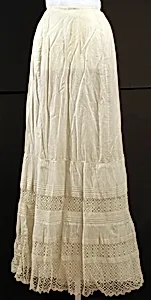
Step into the elegant underbelly of 19th-century fashion with charming cotton petticoat, between 1870 and 1890 by an unknown artist. Hailing from either American or European culture, this undergarment was a staple in women's wardrobes during the Victorian era's later years, when voluminous skirts demanded structured support beneath. Petticoats like this one provided the essential fullness and shape, transforming simple dresses into sweeping silhouettes that embodied the period's ideals of femininity and modesty. Made entirely of cotton—a lightweight, breathable fabric ideal for daily wear—this piece highlights the practical ingenuity of everyday costume design. Cotton's affordability and durability made it accessible across social classes, reflecting broader shifts toward mass-produced textiles during the Industrial Revolution. Though unadorned, its construction speaks to skilled handiwork, with gathered fabrics and precise stitching that ensured comfort and longevity. Now housed in the Metropolitan Museum of Art's Costume Institute, this petticoat was generously gifted by Miss Irene Lewisohn in 1937. It offers visitors a tactile glimpse into the hidden layers of historical fashion, reminding us how undergarments quietly shaped the visible styles we admire today.