
Petticoat
ca. 1902
Medium
silk, cotton
Classification
Petticoat
Culture
French
Department
Costume Institute
Museum
Metropolitan Museum of Art, New York, NY
Credit
Gift of Dorothy Kearton Lhamon, 1979
Accession Number
1979.426
Rights
Public Domain
Art Historical Context
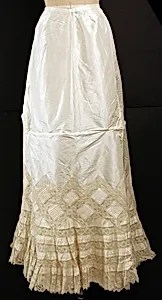
Step into the elegant world of early 20th-century French with this exquisite petticoat from Bon March, dating to around 1902. Crafted from luxurious silk and practical cotton, this undergarment exemplifies the refined craftsmanship of the era's ready-to-wear revolution. Bon Marché, Paris's pioneering department store founded in 2, was a trailblazer in democratizing high fashion, offering stylish pieces like this to a broader audience beyond bespoke couture. During the Edwardian period,ticoats were essential for achieving the era's signature S-shaped silhouette, with a fitted bodice flowing into a voluminous skirt supported by layers of fabric. The combination of shimmering silk for visual appeal and durable cotton for everyday wear highlights the balance of beauty and functionality in women's intimate apparel. This piece reflects the cultural shift toward mass-produced luxury, making sophistication accessible. Housed in the Metropolitan Museum of Art's Costume Institute and gifted by Dorothy Kearton Lhamon in 1979, the petticoat offers a intimate glimpse into French sartorial history, preserving the hidden artistry that shaped outer elegance. A delightful reminder of how underlayers told stories of style and society.