
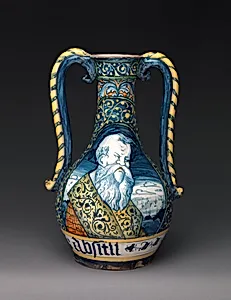
Pharmacy bottle (one of a pair)
ca. 1550
Medium
Maiolica (tin-glazed earthenware)
Dimensions
Overall (confirmed): 15 1/8 × 9 13/16 × 8 1/4 in. (38.4 × 24.9 × 21 cm)
Classification
Ceramics-Pottery
Culture
Italian, Castelli
Department
European Sculpture and Decorative Arts
Museum
Metropolitan Museum of Art, New York, NY
Credit
Bequest of George Blumenthal, 1941
Accession Number
41.190.66
Rights
Public Domain
Tags
Art Historical Context
This stunning pharmacy bottle, one of a pair crafted by Orazio Pompei 1550, hails from Castelli, renowned center of maiolica production in Abruzzo Italy. Made of tin-glazed earthenware, exemplifies the Renaissance mastery of this medium, where a tin oxide glaze created a brilliant white surface ideal for vivid, durable polychrome decoration. Standing at over 15 inches tall, generous form was perfectly suited for storing apothecary ingredients like herbs, spices, or medicinals, blending everyday utility with artistic elegance. Pompei, a skilled painter from Castelli's vibrant workshop tradition, likely adorned this bottle with figural scenes featuring men—common motifs in pharmacy wares that might symbolize healing professions, allegories, or decorative narratives. Maiolica from this era transformed functional ceramics into coveted collector's items, reflecting Italy's cultural flourishing during the 16th century, when apothecaries commissioned ornate jars to display their sophistication. Today, this piece graces the Metropolitan Museum of Art's European Sculpture and Decorative Arts collection, thanks to the 1941 bequest of George Blumenthal. It invites us to appreciate how Renaissance artisans elevated the ordinary, merging science, art, and commerce in luminous clay.