
Pharmacy Jar
Unknown Artist
early 1400s
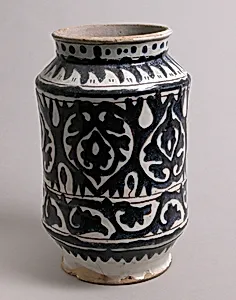
Medium
Tin-glazed earthenware
Dimensions
Overall: 11 15/16 x 7 1/2 in. (30.4 x 19 cm)
Classification
Ceramics
Culture
Italian
Department
Medieval Art
Museum
Metropolitan Museum of Art, New York, NY
Credit
Fletcher Fund, 1946
Accession Number
46.85.8
Rights
Public Domain
Art Historical Context
This elegant *Pharmacy Jar* from 15th-century Italy offers a glimpse into the daily life of medieval apothec. Crafted during the late Medieval period, when Europe was bridging the gap toward the Renaissance, these vessels were essential for storing and dispensing medicines, herbs, and potions. Standing at nearly 12 inches tall, its practical shape—wide mouth and sturdy base—made it ideal for workshops where pharmacists mixed remedies, reflecting Italy's growing trade in pharmaceuticals amid flourishing urban centers like Florence and Venice. Made of tin-glazed earthenware, a technique known as maiolica, the jar features a white tin oxide glaze over fired clay, creating a smooth, brilliant surface perfect for vibrant decorations (though specifics here are not preserved). This method, imported via Islamic influences through Spain and Sicily, revolutionized Italian ceramics by allowing bold colors and intricate designs that mimicked costly luxury wares. Its presence in the Metropolitan Museum of Art's Medieval Art collection, acquired through the Fletcher Fund in 1946, underscores its role as both functional object and artistic treasure. Pharmacy jars like this highlight the intersection of art, science, and commerce in Renaissance Italy, where apothecaries were respected healers blending empirical knowledge with artistry. A testament to anonymous craftsmanship, it invites us to ponder the healers who once held it.