
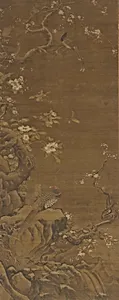
Pheasants and Snow-covered Plum Blossoms
15th-18th century
Classification
Painting
Department
Smithsonian Collection
Museum
Smithsonian American Art Museum
Credit
Gift of Charles Lang Freer
Accession Number
F1916.70
Rights
Public Domain
Tags
About this artwork
Zhe School
Art Historical Context
Behold *Pheasants and Snow-covered Plum Blossoms*, a captivating painting from the Zhe School, a Ming dynasty (1368–1644) style that flourished into the Qing era (1644–1911). Formerly attributed to the Northern Song artist Ge Shouchang (active late 11th century), this 15th–18th-century work reflects the school's professional mastery, drawing from earlier Song traditions with vivid, realistic depictions of nature. Zhe painters, often from Zhejiang province, excelled in bird-and-flower themes, blending meticulous detail with poetic elegance to evoke harmony between wildlife and the seasons. The composition features majestic pheasants amid snow-dusted plum blossoms—symbols of resilience and renewal in Chinese culture, as plums bloom defiantly in winter. Camellias may add lush contrast, highlighting the artist's skill in capturing texture, from feathery plumage to crystalline snow. These motifs carried deep cultural resonance, representing beauty, good fortune, and the enduring spirit of nature. A cherished gift from collector Charles Lang Freer to the Smithsonian American Art Museum, this piece exemplifies the golden age of Chinese decorative painting, inviting visitors to ponder the timeless interplay of fragility and vitality in the natural world.