
Photograph
1916
Medium
photogravure
Dimensions
image: 24.3 x 16.8 cm (9 9/16 x 6 5/8 in.) sheet: 28.8 x 19.6 cm (11 5/16 x 7 11/16 in.)
Classification
Photograph
Department
CPH
Museum
National Gallery of Art, Washington, D.C.
Credit
Patrons' Permanent Fund
Accession Number
1995.36.114
Rights
Public Domain
Art Historical Context
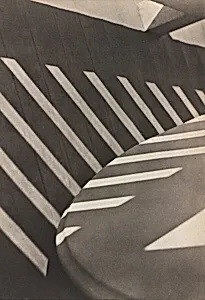
In 1916, Paul Strand produced this photogravure, a printing process valued for its ability to convey rich tonal depth and fine detail from photographic negatives. Measuring just 24.3 by 16.8 centimeters in the image area, the work’s intimate scale encourages close viewing, highlighting the medium’s capacity to transform everyday subjects into finely crafted prints suitable for museum collections. As a leading figure in early modernist photography, Strand helped advance the idea that the camera could be a tool for direct, unmanipulated observation. Photogravure allowed such images to be reproduced with exceptional quality, supporting photography’s growing recognition as a fine art form rather than merely a documentary tool. Acquired through the Patrons’ Permanent Fund, this piece now resides in the National Gallery of Art, where it contributes to the story of how photographers in the 1910s explored new technical and expressive possibilities within the medium.
About the Artist
Paul Strand · 1890–1976
Paul Strand (1890–1976), born Nathaniel Paul Stransky in Brooklyn, New York, to Bohemian immigrant parents Jacob and Matilda Stransky, discovered photography at age twelve with a camera gifted by his father. Enrolled at the progressive Ethical Culture Fieldston School, he studied under documentary photographer Lewis W. Hine and critic Charles Caffin from 1904 to 1909, where Hine instilled a commit...