
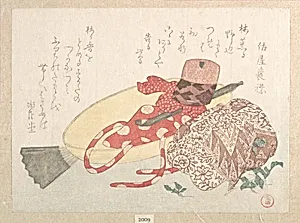
Picnic Outfit
19th century
Medium
Woodblock print (surimono); ink and color on paper
Dimensions
5 7/16 x 7 5/16 in. (13.8 x 18.6 cm)
Classification
Prints
Culture & Period
Japan · Edo period (1615–1868)
Department
Asian Art
Museum
Metropolitan Museum of Art, New York, NY
Credit
H. O. Havemeyer Collection, Bequest of Mrs. H. O. Havemeyer, 1929
Accession Number
JP2009
Rights
Public Domain
Tags
Art Historical Context
Step into the vibrant world of Edo-period Japan with *Picnic Outfit*, a delicate woodblock print (surimono) by Kuboman, created in the 19th century. This intimate work, measuring just 5 7/16 x 7 5/16 inches, captures the refined fashion of the time—likely elegant clothing and fans suited for leisurely picnics—rendered in vivid ink and color on paper. Shunman, a master of ukiyo-e, blended poetry and artistry in his prints, often infusing them with kyōka (humorous verse) to delight private patrons. Surimono like this one were luxury commissions, distinct from mass-produced ukiyo-e for their superior craftsmanship: intricate carving, rich pigments, and subtle textures such as embossing or mica dusting. Produced during the late Edo period (1615–1868), they reflect Japan's urban culture, where outings like hanami (cherry blossom viewing) picnics showcased stylish attire among the merchant class. Fans and clothing symbolized status and seasonality, highlighting the era's obsession with beauty and transience. Now part of the Metropolitan Museum of Art's H. O. Havemeyer Collection, this print offers a glimpse into everyday elegance, bridging art and social life in historic Japan.
About the Artist
Kubo Shunman · 1757–1820
Japanese, 1757–1820