
Piece
Unknown Artist
late 18th century
Medium
Cotton
Dimensions
L. 10 7/8 x W. 13 3/4 inches 27.6 x 34.9 cm
Classification
Textiles-Printed
Culture
French, Bordeaux
Department
European Sculpture and Decorative Arts
Museum
Metropolitan Museum of Art, New York, NY
Credit
Gift of Miss Frances Morris, 1928
Accession Number
28.135.9
Rights
Public Domain
Tags
Art Historical Context
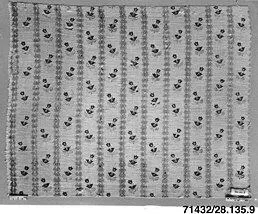
This charming fragment, titled simply *Piece*, hails from late 18th-century Bordeaux, France—a bustling port city renowned for its textile trade and vibrant commerce. Crafted from cotton and measuring just 10⅞ x 13¾ inches (27.6 x 34.9 cm), it the era's printed textiles, featuring delicate floral motifs that brought nature's beauty into everyday life. Donated to the Metropolitan Museum of Art in 1928 by Miss Frances Morris, it now resides in the European Sculpture and Decorative Arts department, classified as a Textiles-Printed work. Printed cotton fabrics like this one marked a textile revolution in 18th-century Europe. Techniques such as copperplate printing, pioneered in France, allowed for intricate, multi-color patterns on lightweight cotton imported via colonial trade routes. Bordeaux's workshops rivaled those in Jouy-en-Josas, producing affordable yet elegant "indiennes"—chintz-inspired cloths—for dresses, upholstery, and linens. These pieces democratized luxury, blending artistry with industry during the Enlightenment and pre-Revolutionary years. Though by an unknown artist, this survivor's floral design captures the period's Rococo-to-Neoclassical shift toward naturalistic elegance. A testament to French ingenuity, it invites us to appreciate how such modest textiles adorned grand interiors and wardrobes alike, weaving history into fabric.