
Piece
Unknown Artist
16th–17th century
Medium
Silk and metal thread
Dimensions
L. 7 1/2 x W. 7 1/4 inches (19.1 x 18.4 cm)
Classification
Textiles-Velvets
Culture
Italian
Department
European Sculpture and Decorative Arts
Museum
Metropolitan Museum of Art, New York, NY
Credit
Gift of The United Piece Dye Works, 1936
Accession Number
36.90.91
Rights
Public Domain
Art Historical Context
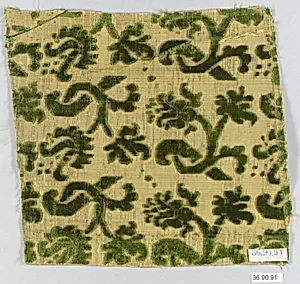
This exquisite fragment, titled simply *Piece*, hails from 16th–17th Italy, a golden era for European textile artistry. Crafted from luxurious silk and shimmering metal threads, this small velvet panel (measuring just 7½ by 7¼ inches) exemplifies the opulence of Renaissance and early Baroque decorative arts. Italian velvet production, centered in cities like Venice and Florence, was renowned worldwide, fueled by thriving silk trade routes and innovative weaving techniques that created a plush pile surface with metallic highlights for dramatic light play. The use of metal threads—likely gold or silver lamé—elevates this textile beyond mere fabric, transforming it into a status symbol for ecclesiastical vestments, aristocratic garments, or lavish furnishings. Velvet weaving demanded masterful skill: warp threads formed the foundation, while weft loops were cut to produce the signature velvety texture, often enriched with brocading for intricate patterns. Though the exact design is unrecorded here, such pieces reflected Italy's cultural prestige, where textiles rivaled painting in artistic value. Generously gifted to The Metropolitan Museum of Art in 1936 by The United Piece Dye Works, this survivor offers a tactile glimpse into a world of splendor, inviting visitors to imagine its role in grand palazzos or sacred spaces.