
Piece
Unknown Artist
mid-15th century
Medium
Silk and metal thread
Dimensions
34 1/2 x 11 in. (87.6 x 27.9c m)
Classification
Textiles-Velvets
Culture
Italian, Venice or Genoa
Department
European Sculpture and Decorative Arts
Museum
Metropolitan Museum of Art, New York, NY
Credit
Fletcher Fund, 1946
Accession Number
46.156.90
Rights
Public Domain
Tags
Art Historical Context
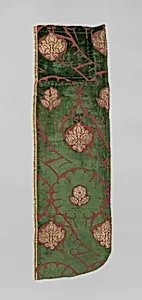
This exquisite fragment of velvet, titled simply *Piece*, hails from mid-15th-century Italy, likely produced in the bustling textile hubs of Venice or Genoa Measuring 34½ x 11 inches, it woven from luxurious silk and shimmering metal threads, exemplifying the opulence of Renaissance decorative arts. Displayed in the Metropolitan Museum of Art's European Sculpture and Decorative Department (acquired via the Fletcher Fund 1946), its classification as a textile-velvet highlights the era's mastery in creating sumptuous fabrics for elite clothing, ecclesiastical vestments, and interior furnishings. Venice and Genoa were Europe's preeminent centers for velvet production during this period, fueled by lucrative trade routes bringing raw silk from the East. Artisans employed sophisticated techniques like cutwork or voided velvet, where loops of pile were sheared to form raised motifs against a contrasting ground. Here, delicate flowers and leaves emerge in intricate patterns, their metallic accents catching the light to evoke floral abundance—a popular Renaissance motif symbolizing renewal and prosperity. Though the artist remains unknown, this piece underscores Italy's pivotal role in exporting high-end textiles across Europe, influencing fashion and design from royal courts to cathedrals. Visitors can appreciate how such velvets blended artistry with commerce, transforming humble threads into treasures of enduring beauty.