
Piece
Unknown Artist
19th century
Medium
Silk
Dimensions
Overall: 10 3/4 x 10 in. (27.3 x 25.4 cm)
Classification
Textiles
Culture & Period
Japan · Edo (1615–1868) or Meiji period (1868–1912)
Department
Asian Art
Museum
Metropolitan Museum of Art, New York, NY
Credit
Gift of Mr. and Mrs. H. O. Havemeyer, 1896
Accession Number
96.14.146
Rights
Public Domain
Tags
Art Historical Context
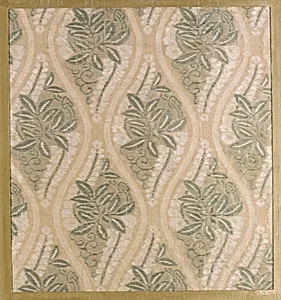
This exquisite silk textile fragment, titled simply *Piece*, hails from Japan during the late Edo period (1615–1868) or early Meiji era (1868–1912), a time of artistic refinement and cultural transition. Measuring just 10¾ x 10 inches, it exemplifies the masterful craftsmanship of Japanese textile arts, where silk was prized for its luster and versatility. Donated to the Metropolitan Museum of Art 1896 by collectors Mr. and Mrs. H. O. Havemeyer, it reflects the growing Western fascination with Japanese aesthetics in the late 19th century, fueled by the export of such delicate works. Featuring motifs of leaves—evident in its design—this piece highlights the Edo and Meiji artisans' obsession with nature's fleeting beauty, a core theme in Japanese art symbolizing seasons, impermanence, and harmony. Silk textiles like this were often used for luxurious kimonos, obi sashes, or decorative screens, showcasing techniques such as intricate weaving, dyeing, or embroidery that demanded extraordinary skill. The fabric's compact size suggests it may be a cherished remnant, preserved for its ornamental elegance. As part of the Met's Asian Art collection, this unassuming *Piece* invites visitors to appreciate the subtlety of Japanese design, where every thread tells a story of tradition meeting modernity. A true gem for textile enthusiasts!