
Piece
Unknown Artist
18th–19th century
Medium
Silk
Dimensions
9 3/4 x 2 1/2 in. (24.77 x 6.35 cm)
Classification
Textiles-Woven
Culture & Period
Japan · Edo period (1615–1868)
Department
Asian Art
Museum
Metropolitan Museum of Art, New York, NY
Credit
Gift of Mr. and Mrs. H. O. Havemeyer, 1896
Accession Number
96.14.110
Rights
Public Domain
Art Historical Context
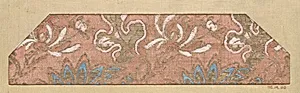
This exquisite silk textile fragment, dating to the 18th–19th century Japan's Edo period (1615–1868), offers a glimpse into the refined artistry of woven fabrics in a time of cultural flourishing. The Edo era, marked by relative peace under the Tokugawa shogunate, saw vibrant urban centers like Edo (modern Tokyo) where textiles became symbols of status, fashion, and craftsmanship. Produced by an unknown artist, this narrow piece—measuring just 9¾ × 2½ inches—likely served as part of a garment, sash, or sample, showcasing the precision of Japanese weaving techniques. Silk, prized for its luster and durability, was a cornerstone of Japanese textile production, with regions like Kyoto renowned for intricate looms that created patterned brocades and satin weaves. Woven textiles from this period often featured motifs inspired by nature, seasons, or daily life, reflecting the era's ukiyo-e aesthetic of the "floating world." The use of high-quality silk highlights the technical mastery involved—dyeing threads before weaving to achieve vibrant, enduring colors without fading. Generously donated to the Metropolitan Museum of Art in 1896 by Mr. and Mrs. H. O. Havemeyer, this piece joins the museum's celebrated Asian Art collection, inviting visitors to appreciate the tactile elegance of Edo-era textiles and their enduring cultural legacy.