
Piece
Unknown Artist
18th–19th century
Medium
Silk
Dimensions
10 x 4 3/4 in. (25.40 x 12.07 cm)
Classification
Textiles-Woven
Culture & Period
Japan · Edo period (1615–1868)
Department
Asian Art
Museum
Metropolitan Museum of Art, New York, NY
Credit
Gift of Mr. and Mrs. H. O. Havemeyer, 1896
Accession Number
96.14.113
Rights
Public Domain
Art Historical Context
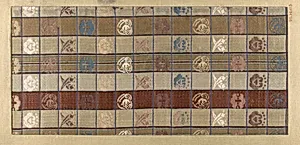
This exquisite silk textile fragment, dating to the 18th–19th during Japan's Edo period (16151868), offers a glimpse into the refined artistry of woven fabrics from that prosperous era. Measuring a modest 10 x 4¾ inches, this piece exemplifies the mastery of Japanese silk weaving, a craft central to daily life, fashion, and cultural expression. The Edo period, marked by urban growth in cities like Edo (modern Tokyo), saw textiles evolve from elite luxuries to accessible goods, with silk prized for its luster, durability, and ability to showcase intricate patterns through looms. Woven silk techniques during this time were highly sophisticated, often employing dobby or jacquard-like methods to create subtle textures and motifs inspired by nature, theater, or auspicious symbols—though the specific design here remains a tantalizing mystery. Such fragments likely originated from kimonos, obi sashes, or furnishings, reflecting the era's vibrant merchant class and ukiyo-e aesthetic influences. Silk production thrived in regions like Nishijin, where weavers innovated to meet booming demand. Generously gifted to the Metropolitan Museum of Art in 1896 by Mr. and Mrs. H. O. Havemeyer, this "Piece" endures as a testament to Edo Japan's textile legacy, inviting visitors to appreciate the delicate interplay of thread and history in Asian Art.