
Piece
Unknown Artist
18th–19th century
Medium
Silk
Dimensions
6 x 2 3/4 in. (15.24 x 6.99 cm)
Classification
Textiles-Woven
Culture & Period
Japan · Edo (1615–1868)
Department
Asian Art
Museum
Metropolitan Museum of Art, New York, NY
Credit
Gift of Mr. and Mrs. H. O. Havemeyer, 1896
Accession Number
96.14.401
Rights
Public Domain
Art Historical Context
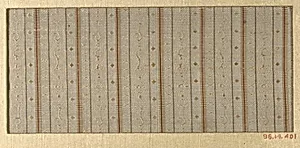
This delicate silk textile fragment, woven in Japan during the Edo period (1615–1868), exemplifies the masterful craftsmanship of the era's thriving textile arts. Measuring just 6 x 2¾ inches, this small "piece" likely served as part of a larger garment, accessory, or decorative item, reflecting the period's emphasis on intricate, luxurious fabrics. Donated to the Metropolitan Museum of Art in 1896 by collectors Mr. and Mrs. H. O. Havemeyer, it offers a glimpse into Japan's sophisticated weaving traditions amid a time of relative peace and economic prosperity. The Edo period marked a golden age for Japanese silk production, with regions like Nishijin in Kyoto becoming renowned for their advanced looms and techniques. Woven silk, prized for its sheen and durability, was essential to daily life and social status—adorning kimonos, obi sashes, and ceremonial robes. Artisans employed complex methods like plain weave or supplementary weft patterning to create vibrant, enduring designs, often inspired by nature, theater, or urban motifs. Though the specific motifs here are not detailed, this fragment highlights silk's cultural significance as a symbol of refinement and innovation. In a society where textiles conveyed identity and artistry, such pieces bridged utility and beauty, inviting us to appreciate the unseen labor of anonymous Edo weavers.