
Piece
Unknown Artist
18th–19th century
Medium
Silk
Dimensions
7 x 4 3/4 in. (17.78 x 12.07 cm)
Classification
Textiles-Woven
Culture & Period
Japan · Edo (1615–1868)
Department
Asian Art
Museum
Metropolitan Museum of Art, New York, NY
Credit
Gift of Mr. and Mrs. H. O. Havemeyer, 1896
Accession Number
96.14.170
Rights
Public Domain
Art Historical Context
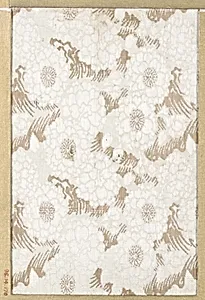
This exquisite silk textile fragment, dating to the 18th–19th century Japan's Edo period (16151868), offers a glimpse into the refined artistry of woven fabrics from that prosperous era. Produced in Japan, this small piece (7 x 4¾ in.) exemplifies the mastery of silk weaving, a central to daily life and high fashion. The Edo period saw economic stability and urban growth, fueling innovations in textiles used for kimonos, obi sashes, and ceremonial garments. Silk, prized for its luster and durability, was woven on specialized looms, often incorporating complex patterns that reflected seasonal motifs, nature, or auspicious symbols—though the precise design here remains a tantalizing mystery. Woven textiles like this one highlight Japan's cultural emphasis on impermanence and beauty in everyday objects, blending functionality with aesthetic sophistication. Artisans employed techniques such as ikat or supplementary wefts to create intricate textures and colors, making such pieces status symbols among merchants and samurai alike. Donated to the Metropolitan Museum of Art in 1896 by collectors Mr. and Mrs. H. O. Havemeyer, this fragment preserves a slice of Edo-era elegance, inviting us to appreciate the anonymous skill that elevated humble cloth to art.