
Piece
Unknown Artist
18th–19th century
Medium
Silk
Dimensions
15 1/2 x 10 3/4 in. (39.37 x 27.31 cm)
Classification
Textiles-Woven
Culture & Period
Japan · Edo (1615–1868)
Department
Asian Art
Museum
Metropolitan Museum of Art, New York, NY
Credit
Gift of Mr. and Mrs. H. O. Havemeyer, 1896
Accession Number
96.14.180
Rights
Public Domain
Tags
Art Historical Context
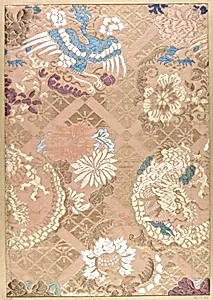
This delicate silk textile fragment, titled simply *Piece*, hails from Japan's Edo period (16151868), a time of relative peace and cultural flourishing under the Tokugawa shogunate. Woven in the 18th or 19th century, measures a modest 15½ × 10¾ inches and features motifs of birds, a common emblem in Japanese art symbolizing freedom, seasonality, and harmony with nature. As part of the Metropolitan Museum of Art's Asian collection, it exemplifies the exquisite craftsmanship of Edo-era textiles, often produced for garments like kimonos or decorative screens. Silk weaving was a pinnacle of technical virtuosity in Japan, with artisans employing intricate looms to create luminous fabrics prized for their sheen and durability. This piece highlights the period's mastery of jacquard-like techniques, where threads are dyed and woven to form vivid patterns without additional embroidery. Birds, rendered with fluid grace, reflect the era's fascination with the natural world, blending aesthetic beauty with subtle philosophical undertones. Generously gifted to the Met in 1896 by Mr. and Mrs. H. O. Havemeyer, renowned collectors of Asian and Impressionist art, this textile offers visitors a tangible glimpse into Japan's textile heritage—a testament to the everyday artistry that defined Edo life.