
Piece
Unknown Artist
18th century
Medium
Silk, metallic thread
Dimensions
6 5/8 × 8 3/16 in. (16.8 × 20.8 cm)
Classification
Textiles-Woven
Culture & Period
Japan · Edo period (1615–1868)
Department
Asian Art
Museum
Metropolitan Museum of Art, New York, NY
Credit
Gift of Mr. and Mrs. H. O. Havemeyer, 1896
Accession Number
96.14.473
Rights
Public Domain
Tags
Art Historical Context
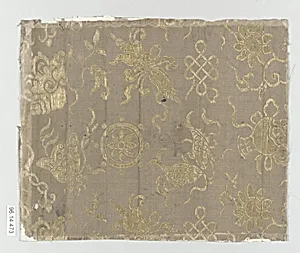
This exquisite woven textile fragment, titled simply *Piece*, hails from 18th-century Japan during the Edo period (161–1868), a time of relative peace and cultural flourishing. Craft from fine silk and shimmering metallic threads, it measures just 6 5/8 × 8 3/16 inches, suggesting it may have been part of a garment, screen, or decorative item. The use of metallic threads—often gold or silver lamé—elevates the work, reflecting advanced weaving techniques that created luxurious, light-reflecting surfaces prized in Japanese artistry. Fish motifs, as indicated here, held deep cultural resonance in Edo Japan, symbolizing abundance, good fortune, and perseverance in folklore and art. Woven textiles like this were integral to daily life and status, adorning kimonos or noren curtains in merchant homes and theaters. The intricate interplay of silk's softness with metallic gleam showcases the period's mastery of jacquard-like looms, blending functionality with aesthetic delight. Generously gifted to the Metropolitan Museum of Art in 1896 by Mr. and Mrs. H. O. Havemeyer, this anonymous treasure offers a glimpse into Japan's textile heritage, inviting us to appreciate the quiet elegance of everyday opulence.