
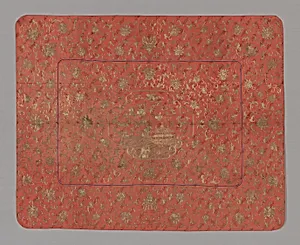
K'ang Cover
Qing dyansty (1644–1911), 1800/50
Medium
Silk, 3:1 'Z' twill damask weave; embroidered with silk and silvered-metal-strip-wrapped silk in knot stitches; couching; lined with silk, 5:1 twill damask weave
Dimensions
110.7 × 138.4 cm (43 5/8 × 54 1/2 in.)
Classification
textile
Department
Textiles
Museum
Art Institute of Chicago
Accession Number
22125
Rights
Public Domain
Art Historical Context
Welcome to the Textiles gallery at the Art Institute of Chicago where we encounter the exquisite *K'ang Cover* from China's Qing dynasty (16441911), dated around 1800–1850. A *k'ang* was a traditional heated brick platform bed used in northern Chinese homes for sleeping, lounging, and even daily activities during harsh winters. This opulent silk cover, measuring 110.7 × 138.4 cm, would have adorned an elite household, transforming a functional furnishing into a display of imperial-era luxury and refinement. Crafted by an unknown artisan, the cover showcases masterful weaving and embroidery techniques. Its face features a 3:1 'Z' twill damask weave, a sophisticated method that creates intricate, reversible patterns through the interplay of warp and weft threads—no dyes needed. Embellished with silk floss and silvered-metal-strip-wrapped silk in knot stitches and couching (where threads are laid and secured with surface stitches), it gleams with metallic shimmer. The lining, in a finer 5:1 twill damask, adds durability and tactile elegance. In Qing culture, such textiles symbolized wealth and technical prowess, often produced in imperial workshops or by skilled guild artisans. This piece highlights the dynasty's peak in textile innovation, blending functionality with artistry for everyday splendor. Pause and imagine its silken warmth underfoot!
About the Artist
Unknown
The artist designated as "Unknown" in our virtual museum's collection exemplifies a poignant chapter in art history: creators whose identities have faded into obscurity despite the enduring power of their work. With only one known artwork attributed to them in our holdings, this figure represents countless anonymous hands that shaped visual culture across centuries. Museums worldwide, including th...