
Piece
Unknown Artist
18th–19th century
Medium
Silk
Dimensions
7 1/2 x 3 3/4 in. (19.05 x 9.53 cm)
Classification
Textiles-Woven
Culture & Period
Japan · Edo (1615–1868) or Meiji period (1868–1912)
Department
Asian Art
Museum
Metropolitan Museum of Art, New York, NY
Credit
Gift of Mr. and Mrs. H. O. Havemeyer, 1896
Accession Number
96.14.721
Rights
Public Domain
Tags
Art Historical Context
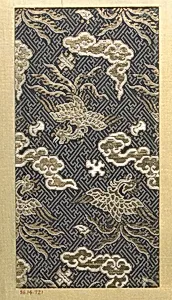
This exquisite silk textile fragment, titled simply *Piece*, hails from Japan during the late Edo period (1615–1868) or early Meiji era (1868–1912). Woven with remarkable precision on a small scale—measuring just 7½ x 3¾ inches—it showcases intricate motifs of phoenixes soaring amid swirling clouds. These designs evoke the grandeur of traditional Japanese artistry, where silk weaving reached pinnacles of technical mastery, often in regions like Kyoto's Nishijin district. The phoenix (known as *ho-o* in Japan) symbolizes rebirth, virtue, and imperial grace, while clouds represent the ethereal realms of heaven and prosperity. Such woven textiles were prized for garments like kimonos or obi sashes, or as decorative panels, reflecting the era's blend of opulent craftsmanship and symbolic depth. During the Edo period, urban prosperity fueled demand for these luxurious fabrics, produced on complex looms that interwove colored silk threads to create shimmering, pictorial effects without dyes bleeding. A generous gift to the Metropolitan Museum of Art from Mr. and Mrs. H. O. Havemeyer in 1896, this piece highlights early Western fascination with Japanese art amid the global Japonisme wave. Though anonymous, its survival offers a window into Japan's textile heritage, where every thread tells a story of cultural elegance and skill.