
Piece
Unknown Artist
18th–19th century
Medium
Silk
Dimensions
8 1/4 x 4 3/4 in. (20.95 x 12.07 cm)
Classification
Textiles-Woven
Culture & Period
Japan · Edo period (1615–1868)
Department
Asian Art
Museum
Metropolitan Museum of Art, New York, NY
Credit
Gift of Mr. and Mrs. H. O. Havemeyer, 1896
Accession Number
96.14.586
Rights
Public Domain
Art Historical Context
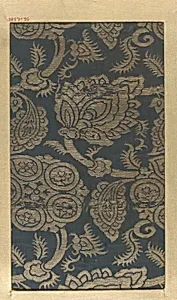
This delicate silk textile fragment, titled *Piece* and created by an unknown Japanese artist during the 18th–19th, hails from the Edo period (1615–8)—an era of relative peace and cultural flourishing under the Tokugawaogunate. Measuring just 8¼ x 4¾ inches (20.95 x 12.07 cm), it a small but precious survivor of Japan's renowned textile tradition, now housed in the Metropolitan Museum Art's Asian Art departmentWoven silk was a pinnacle of Edo craftsmanship, prized for its lustrous sheen, fine texture, and versatility in garments like kimonos. Artisans employed sophisticated looms to interlace silk threads, often creating intricate patterns that symbolized status, seasons, or nature. These textiles were not mere fabric but cultural artifacts, reflecting Japan's isolationist prosperity and aesthetic refinement, where fashion became an art form accessible across social classes. Gifted to the Met in 1896 by collectors Mr. and Mrs. H.O. Havemeyer, this piece invites us to appreciate the subtlety of everyday luxury in Edo Japan, whispering stories of skilled hands and vibrant markets long past.