
Piece
Unknown Artist
18th–19th century
Medium
Silk
Dimensions
11 3/4 x 10 1/2 in. (29.84 x 26.67 cm)
Classification
Textiles-Woven
Culture
Japan
Department
Asian Art
Museum
Metropolitan Museum of Art, New York, NY
Credit
Gift of Mr. and Mrs. H. O. Havemeyer, 1896
Accession Number
96.14.1464
Rights
Public Domain
Art Historical Context
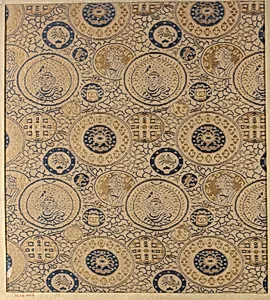
This delicate silk *Piece*, crafted by an unknown Japanese artist during the 18th–19th centuries, exemplifies the refined artistry of Edo- and early Meiji-period textiles. Measuring 11¾ × 10½ inches (29.84 × 2667 cm), it belongs to the Metropolitan Museum of Art's Asian Art collection, classified as a woven textile. Such fragments were often parts of larger garments like kimonos or obi sashes, showcasing Japan's mastery of silk weaving techniques that blended functionality with aesthetic beauty. In Japanese culture, silk production flourished from the 17th century onward, symbolizing status, craftsmanship, and seasonal motifs integral to daily life and festivals. Woven textiles like this one highlight intricate loom work, where threads were dyed and patterned before weaving, creating durable yet luxurious fabrics prized by samurai, merchants, and nobility alike. The anonymity of the artist reflects the collaborative nature of textile workshops, where skilled artisans prioritized communal excellence over individual fame. Generously gifted to the Met in 1896 by Mr. and Mrs. H. O. Havemeyer, prominent collectors of Asian art, this piece offers a tangible link to Japan's textile heritage. It invites visitors to appreciate the tactile elegance of silk—smooth, shimmering, and enduring—while pondering the hands that wove its story centuries ago.