
Piece
Unknown Artist
18th–19th century
Medium
Silk
Dimensions
7 3/4 x 6 1/2 in. (19.68 x 16.51 cm)
Classification
Textiles-Woven
Culture
Japan
Department
Asian Art
Museum
Metropolitan Museum of Art, New York, NY
Credit
Gift of Mr. and Mrs. H. O. Havemeyer, 1896
Accession Number
96.14.1507
Rights
Public Domain
Art Historical Context
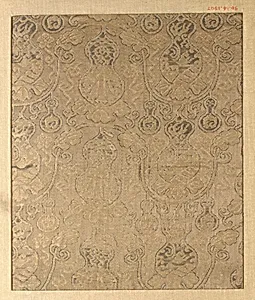
This exquisite silk textile fragment, titled simply *Piece*, hails from Japan during the 18th–19th centuries, a time when the country’s Edo and early Meiji periods flourished with masterful craftsmanship. Woven with precision, it exemplifies the artistry of Japanese textile production, where silk—prized for its luster and durability—was transformed into luxurious fabrics for kimonos, furnishings, and ceremonial garments. At just 7¾ x 6½ inches, this small-scale work likely served as a sample or panel, showcasing the weaver’s skill in creating intricate patterns through complex loom techniques. In Japanese culture, woven silks held profound significance, blending functionality with aesthetic beauty and often reflecting seasonal motifs, nature, or folklore. Though the artist remains unknown, such pieces highlight the anonymous yet highly skilled labor of regional workshops, contributing to Japan’s global reputation for textile innovation. Acquired as a gift from Mr. and Mrs. H. O. Havemeyer in 1896, it now resides in the Metropolitan Museum of Art’s Asian Art Department, offering visitors a tangible link to Japan’s rich weaving heritage and the opulent world of pre-industrial craftsmanship.