
Piece
Unknown Artist
18th–19th century
Medium
Silk
Dimensions
7 1/4 x 7 in. (18.41 x 17.78 cm)
Classification
Textiles-Woven
Culture
Japan
Department
Asian Art
Museum
Metropolitan Museum of Art, New York, NY
Credit
Gift of Mr. and Mrs. H. O. Havemeyer, 1896
Accession Number
96.14.1528
Rights
Public Domain
Tags
Art Historical Context
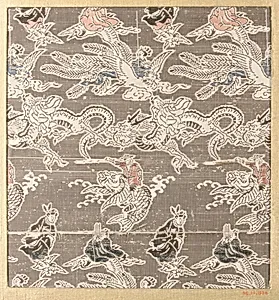
This exquisite silk textile fragment, titled simply *Piece*, hails from Japan during the 18th–19th, a golden era for textile arts in the Edo and early Meiji periods. Measuring just 7¼ x 7 inches, its compact size suggests it may have been a sample, patch, or detail from a larger garment like a kim or obi sash. Woven with masterful precision, the medium of silk highlights Japan's renowned expertise in sericulture and loom work, where fine threads were transformed into vibrant, durable fabrics prized for both everyday wear and ceremonial use. The artwork's depiction of mythical creatures—common motifs in Japanese folklore—infuses it with cultural depth. Such beings, often dragons, phoenixes, or kirin, symbolized protection, prosperity, and harmony with nature, reflecting Shinto and Buddhist influences. Woven textiles like this one showcased innovative techniques, blending intricate patterning with symbolic storytelling, making them status symbols among samurai, merchants, and nobility. A generous gift to the Metropolitan Museum of Art from Mr. and Mrs. H. O. Havemeyer in 1896, this piece exemplifies early Western fascination with Japanese art during the Japonisme wave. Visitors, marvel at how its delicate weave captures timeless myths in a tangible, shimmering form.