
Pietà
c. 1500
Medium
walnut with traces of polychromy
Dimensions
72; 18; 44
Rights
Public Domain
About this artwork
walnut with traces of polychromy
Art Historical Context
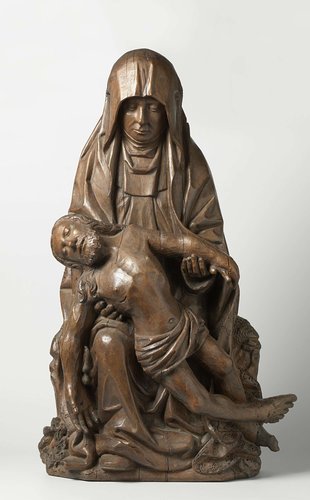
Nestled in the quiet reverence of late medieval devotion, this anonymous *Pietà* from around 1500 captures the timeless sorrow of the Virgin Mary cradling the lifeless body of Christ. Carved at the cusp of the Renaissance, such sculptures were heartfelt expressions of piety, often found in churches, chapels, or private homes across Northern Europe. The intimate scale—standing about 72 cm tall—invites visitors to lean in, fostering a personal connection to the universal theme of maternal grief and redemption. Crafted from walnut wood, a durable and finely grained choice favored by sculptors for its ability to hold intricate details, this piece bears traces of original polychromy—vibrant paints that once brought the figures to vivid life with lifelike skin tones, flowing drapery, and gilded accents. Though faded over centuries, these remnants reveal the era's masterful technique of combining carving with painting, heightening emotional realism and drawing worshippers deeper into the sacred narrative. As an anonymous work, it embodies the collective artistry of workshops where skilled hands served faith over fame. This *Pietà* reminds us of art's power to console, its walnut form a testament to enduring craftsmanship amid the spiritual fervor of 1500. Pause here and let its quiet pathos speak.
About the Artist
anonymous
In the vast tapestry of art history, "Anonymous" stands not as a singular individual but as a collective designation for countless unidentified creators whose works have endured across millennia. These artists, spanning prehistoric cave painters to medieval illuminators and folk craftsmen, produced the foundational layers of human visual culture. Prior to the Renaissance, when individual fame emer...