
東漢 鉛綠釉陶豬圈|Pigsty
Unknown Artist
1st–early 3rd century
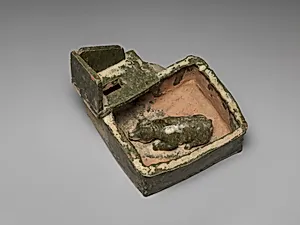
Medium
Earthenware with green lead glaze
Dimensions
H. 5 1/4 in. (13.3 cm); D. 9 1/4 in. (23.5 cm)
Classification
Tomb Pottery
Culture & Period
China · Eastern Han dynasty (25–220)
Department
Asian Art
Museum
Metropolitan Museum of Art, New York, NY
Credit
Charlotte C. and John C. Weber Collection, Gift of Charlotte C. and John C. Weber, 1994
Accession Number
1994.605.24
Rights
Public Domain
Tags
Art Historical Context
Step into the vibrant world of Eastern Han dynasty (25–220 CE) with this charming earthenware model of a pigsty, a exquisite example of tomb pottery known as *mingqi*. Crafted by an unknown artisan, this small-scale replica (just 5¼ inches high and 9¼ inches in diameter) captures the essence of rural life, complete with pigs symbolizing prosperity and fertility. During the Han era, such models were buried with the deceased to ensure comfort and abundance in the afterlife, reflecting deep-seated beliefs in an eternal, mirrored existence. The artwork's standout feature is its green lead glaze, an innovative Han technique that produced a glossy, jewel-like sheen on low-fired earthenware. This early glazing method, likely applied via molds for efficiency, marked a technological leap in Chinese ceramics, paving the way for later Tang dynasty splendor. Pigs, vital to the agrarian economy, underscored the owner's wealth and the cultural reverence for livestock as harbingers of good fortune. Today, housed in the Metropolitan Museum of Art's Asian Art department as part of the Charlotte C. and John C. Weber Collection, this pigsty offers a delightful glimpse into ancient daily life—reminding us how even the humblest farmyard held spiritual significance.