
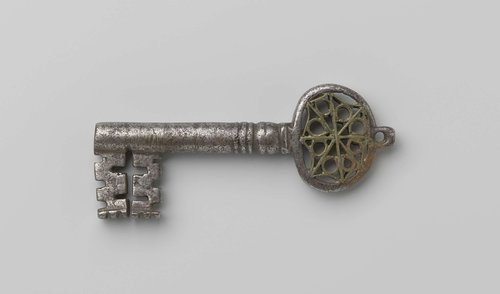
Pijpsleutel
Unknown Artist
ca. 1400 - ca. 1950
Medium
iron (metal)
Dimensions
4; 11.2
Rights
Public Domain
About this artwork
lengte 11,2 cm x breedte 4 cm
Art Historical Context
Behold the *Pijpsleutel*, a humble yet ingenious iron pipe wrench crafted by an unknown artisan sometime between ca. 140 and ca. 1950. Measuring a compact 11.2 cm in length and 4 cm width, this tool exemplifies the enduring practicality of medieval and early modern metalworking. In Dutch, "pijpsleutel" translates to "pipe," referring to its specialized design for gripping and turning pipes, fittings, or nuts—essential for plumbers, mechanics, and across centuries. Forged from robust iron, the pijpsleutel's medium highlights the blacksmith's mastery of heat, hammer, and anvil, techniques refined since the Iron Age but perfected in Europe during the late Middle Ages. Its broad date range reflects how such tools evolved little in form, remaining vital amid the Industrial Revolution's rise, when iron production boomed and infrastructure like water systems expanded. Though utilitarian, its survival speaks to the artistry in functional design—simple curves and jaws that balanced strength with portability. In a museum setting, this unassuming object invites us to appreciate the unsung heroes of history: the craftsmen whose innovations quietly enabled modern life. A testament to human ingenuity, it bridges eras, reminding visitors that everyday tools often hold the deepest cultural significance.