
Pillow Cover (Depicting the Annunciation)
1550/1600
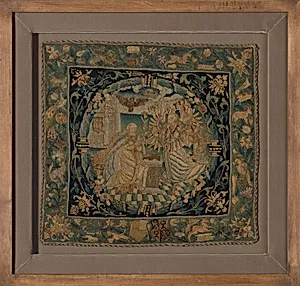
Medium
Linen, plain weave; embroidered with wool and silk in satin stitches; laid work and couching
Dimensions
48.9 × 52 cm (19 1/4 × 20 1/2 in.)
Classification
textile
Department
Textiles
Museum
Art Institute of Chicago
Accession Number
64509
Rights
Public Domain
Art Historical Context
This exquisite pillow cover from the late 16th century (ca. 1550–1600) captures the biblical scene of the Annunciation, the angel Gabriel announces to the Virgin Mary that she will conceive Jesus. Crafted by an unknown artist, it measures 48.9 × 52 cm and was designed for a bed pillow, blending everyday utility with profound religious devotion. Housed in the Art Institute Chicago's Textiles Department, it exemplifies Renaissance-era domestic embroidery, likely from Europe, where such items adorned wealthy households as symbols of piety and craftsmanship. The linen plain-weave ground is richly embroidered with wool and silk threads, employing sophisticated techniques like satin stitches for smooth, lustrous surfaces; laid work, where threads are laid parallel and secured; and couching, which tacks down threads for bold outlines and texture. These methods highlight the embroiderer's mastery, transforming a functional object into a vibrant tapestry of gold, blue, and red hues that would have glowed in candlelit chambers. In an age before printed fabrics, these hand-stitched textiles were prized heirlooms, merging artistic skill with spiritual narrative. The Annunciation motif underscores the era's Catholic fervor, inviting contemplation in intimate bedroom settings—a reminder of how art wove faith into daily life.
About the Artist
Unknown
The artist designated as "Unknown" in our virtual museum's collection exemplifies a poignant chapter in art history: creators whose identities have faded into obscurity despite the enduring power of their work. With only one known artwork attributed to them in our holdings, this figure represents countless anonymous hands that shaped visual culture across centuries. Museums worldwide, including th...