
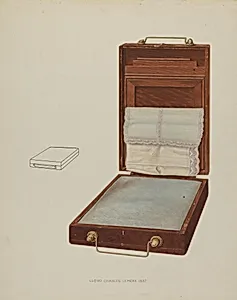
Pillow Sham Holder
Medium
watercolor, graphite, and gouache on paperboard
Dimensions
overall: 35.9 x 28.2 cm (14 1/8 x 11 1/8 in.) Original IAD Object: 2 3/4" high; 7 1/2" wide
Classification
Index of American Design
Department
CG-W
Museum
National Gallery of Art, Washington, D.C.
Credit
Index of American Design
Accession Number
1943.8.13236
Rights
Public Domain
Art Historical Context
**Pillow Sham Holder**Rendered by artist Lloyd Charles Lemcke in1937, this delicate watercolor, graphite, andache work on paperboard (35.9 x 28.2 cm) captures a charming 19th-century American folk object: a pillow sham holder measuring just 2¾ inches high and 7½ inches wide Likely a freestanding decorative stand for displaying ornamental pillow covers, it exemplifies everyday household craftsmanship from America's decorative arts tradition, blending functionality with subtle elegance. Created as part of the *Index of American Design*, a landmark Federal Art Project under the Works Progress Administration (WPA) during the Great Depression, this piece reflects a national effort to document and celebrate indigenous American design. From 1935 to 1942, over 18,000 such meticulous renderings by talented artists like Lemcke preserved folk art, quilts, whirligigs, and utensils that might otherwise have been lost to time, fostering cultural pride amid economic hardship. Lemcke's masterful use of layered media—precise graphite outlines, vibrant gouache for color, and translucent watercolor washes—brings the holder's carved details and patina to life with photographic accuracy and artistic flair. Housed in the National Gallery of Art's collection, it invites us to appreciate the ingenuity of anonymous makers, reminding visitors of the beauty hidden in humble domestic objects.
About the Artist
Lloyd Charles Lemcke · 1855–present
Lloyd Charles Lemcke was an American artist active around 1935, best known for his contributions to the Index of American Design, a Federal Art Project initiative under the Works Progress Administration (WPA) that aimed to document the nation's folk crafts and vernacular objects through precise artistic renderings. Little is known about Lemcke's early life or formal training, as biographical detai...