
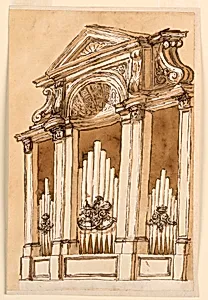
Pipe Organ With Case
1780-1783
Classification
architecture
Department
Smithsonian Collection
Museum
Smithsonian American Art Museum
Credit
Museum purchase through gift of various donors and from Eleanor G. Hewitt Fund
Accession Number
1938-88-1357
Rights
Public Domain
About this artwork
Research in Progress
Art Historical Context
Step into the resonant world of 18th Italian craftsmanship with *Pipe Organ With Case* Giuseppe Barberi (1746–1809), created between 1780 and 1783. Barberi, a prominent Roman architect and designer, was renowned for his Neoclassical contributions to furniture, interiors, and decorative arts during a time when Italy's artistic scene blended Renaissance grandeur with emerging Enlightenment precision. This piece, now housed in the Smithsonian American Museum, exemplifies how functional objects like musical instruments were elevated to architectural marvels. Classified as architecture, the organ's case highlights Barberi's skill in designing ornate enclosures that served both practical and aesthetic purposes. In late 18th-century Europe, pipe organs were central to churches and palaces, their cases often rivaling altarpieces in opulence—sculpted, gilded, and proportioned like miniature temples. Though research on this specific work is ongoing, it reflects the era's fusion of sound, space, and sculpture, where architecture extended into everyday splendor. Acquired through museum purchase with gifts from donors and the Eleanor G. Hewitt Fund, this artifact invites us to ponder music's architectural echo. Imagine its pipes filling sacred spaces with harmony, a testament to Italy's enduring legacy in blending art and utility.