
Pitcher
1810/20
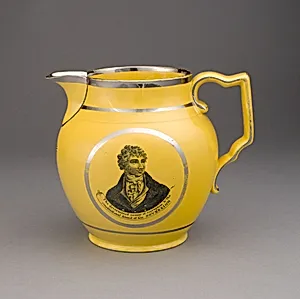
Medium
Lead-glazed earthenware with lustre decoration
Dimensions
H.: 15.2 cm (6 in.)
Classification
pitcher (vessel)
Department
Applied Arts of Europe
Museum
Art Institute of Chicago
Accession Number
6683
Rights
Public Domain
Art Historical Context
This elegant pitcher, crafted around 1810–1820, exemplifies the refined applied arts of early 19th-century Europe Standing at just 15.2 cm tall, it served as a practical vessel for serving beverages, blending everyday utility with decorative appeal. Housed in the Art Institute of Chicago's of Applied Arts of Europe it reflects the period's growing emphasis on accessible luxury in household goods, as pottery production expanded amid industrialization. The piece is made of lead-glazed earthenware, durable and versatile medium that allowed for mass production while achieving a smooth, glossy finish. Its standout feature is the lustre decoration—a sophisticated technique where metallic oxides were fired over the glaze to create a shimmering, iridescent effect reminiscent of gold or silver. Popularized in Europe from earlier Spanish and Islamic traditions, lustreware added an opulent touch to functional ceramics, making them coveted for dining tables and sideboards. Though the artist remains unknown, this pitcher's delicate scale and lustrous sheen highlight the artistry of anonymous potters who elevated ordinary objects into treasures. A charming glimpse into Regency-era domestic life, it invites us to appreciate how craftsmanship turned the mundane into the magnificent.
About the Artist
Unknown
The artist designated as "Unknown" in our virtual museum's collection exemplifies a poignant chapter in art history: creators whose identities have faded into obscurity despite the enduring power of their work. With only one known artwork attributed to them in our holdings, this figure represents countless anonymous hands that shaped visual culture across centuries. Museums worldwide, including th...