
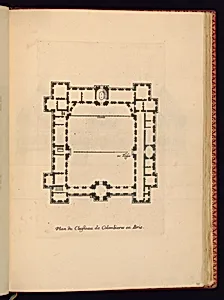
Plan du Chasteau de Colombieres en Brie
ca.1635–ca.1660
Medium
Classification
Department
Smithsonian Collection
Museum
Smithsonian American Art Museum
Credit
Purchased for the Museum by the Advisory Council
Accession Number
1921-6-351-34
Rights
Public Domain
About this artwork
Research in Progress
Art Historical Context
Jean Marot (1619–1679), a prominent French engraver and architect created *Plan du Chasteau Colombieres en Brie* around 1635–1660. This intricate print captures the layout of the Château de Colombières-en-Brie, a noble estate the Brie region east of Paris. Marot specialized in topographic views and architectural plans, documenting the grandeur of French châteaux the early Baroque era under Louis XIII and the young Louis XIV. His works offer a window into 17th-century aristocratic life, showcasing fortified residences that blended Renaissance elegance with emerging classical symmetry. As a print, likely an etching or engraving, this piece exemplifies the period's innovative reproductive techniques. Prints allowed precise dissemination of architectural designs to builders, patrons, and collectors across Europe, fueling the spread of French style. Marot's meticulous line work and perspective highlight structural details—from moats and pavilions to gardens—making it both a practical blueprint and an artistic celebration of engineering prowess. Housed in the Smithsonian American Art Museum's collection, acquired through the Advisory Council, this rare example underscores Marot's influence on vedute (topographical views). Though research continues, it invites visitors to ponder the splendor of vanished estates and the artistry preserving them.