
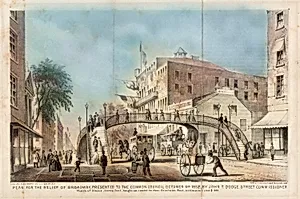
Plan for the Relief of Broadway
Medium
Graphic Arts-Print
Classification
Graphic Arts-Print
Department
Smithsonian Collection
Museum
Smithsonian American Art Museum
Credit
Smithsonian American Art Museum, Gift of International Business Machines Corporation
Accession Number
1966.48.36
Rights
Public Domain
Tags
Art Historical Context
Gerald Sinclair Hayward's *Plan for the Relief of* (n.d.) is a graphic arts print from the Smithsonian American Art Museum collection, gifted by the International Business Machines Corporation. This work depicts a visionary urban solution for New York City's bustling Broadway, featuring elevated footbridges, horse-drawn carriages, carts, and bustling figure groups navigating the chaotic streetscape. As a print, it exemplifies how graphic arts served as a powerful medium in the 19th century to and publicize civic improvements, allowing architects and planners to share bold ideas with the public affordably and widely. The artwork reflects the era's pressing urban challenges in rapidly growing Manhattan, where commercial hubs like Broadway teemed with pedestrians, vehicles, and commerce, often leading to congestion and safety hazards. Hayward's design cleverly separates foot traffic via overhead bridges, promoting smoother flow and safer passage—a forward-thinking civic proposal that anticipated modern infrastructure like pedestrian overpasses. This print not only highlights Hayward's skill in rendering detailed architectural plans with lively human elements but also underscores the cultural importance of such visuals in shaping American cities. Visitors will appreciate how it captures the ingenuity of Gilded Age problem-solving, blending practicality with artistic flair.