
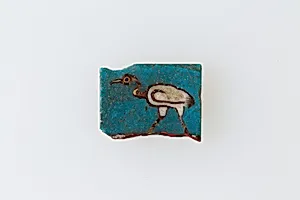
Plaque, black ibis hieroglyph
Unknown Artist
100 BC–100 AD
Medium
Glass
Dimensions
H. 1.7 × W. 2.2 cm (11/16 × 7/8 in.)
Classification
Plaque, bird hieroglyph
Period
Ptolemaic Period–Roman Period
Department
Egyptian Art
Museum
Metropolitan Museum of Art, New York, NY
Credit
Purchase, Edward S. Harkness Gift, 1926
Accession Number
26.7.1204
Rights
Public Domain
Tags
Art Historical Context
This delicate glass plaque, just 1.7 by 2.2 cm, the elegant form of a black ibis hieroglyph Egypt's Ptolemaic-Roman Period (100 BC– AD). Crafted by unknown artist, it exemplifies the fusion of Greek, Roman, and native Egyptian influences during a time when Alexandria was a vibrant cultural crossroads. The ibis, a wading bird sacred to Thoth—the god of wisdom, writing, and the moon—symbolized knowledge and scribes in hieroglyphic script, often appearing in amulets, seals, or decorative inlays. Glassmaking flourished in this era, with artisans employing sophisticated techniques like molding and cold-working to create translucent, jewel-like objects affordable yet luxurious compared to precious stones. This tiny plaque, likely used as an inlay for furniture, jewelry, or ritual items, highlights the precision of Egyptian craftsmanship, where even miniature works conveyed profound symbolism. Its deep black hue evokes the Nile's mysteries, bridging everyday artistry with divine iconography. Acquired through the Edward S. Harkness Gift in 1926, this piece now resides in the Metropolitan Museum of Art's Egyptian Art department, offering visitors a glimpse into the enduring legacy of ancient scribes and their feathered muse.