
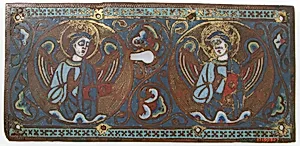
Plaque from a Chasse
Unknown Artist
13th century
Medium
Champlevé enamel, copper-gilt
Dimensions
Overall: 3 7/16 x 7 1/4 x 1/16 in. (8.7 x 18.4 x 0.2 cm)
Classification
Enamels-Champlevé
Culture
French
Department
Medieval Art
Museum
Metropolitan Museum of Art, New York, NY
Credit
Gift of J. Pierpont Morgan, 1917
Accession Number
17.190.807
Rights
Public Domain
Art Historical Context
This exquisite *Plaque from a Chasse*, crafted by an unknown French artist in the 13th century is a stunning example of medieval enamelwork from the Metropolitan Museum of Art's Medieval Art collection. Measuring just 3 7/16 x 7 1/4 inches, this slender copper-gilt panel once adorned a *chasse*—a-shaped reliquary designed to house sacred relics of saints. Such objects were central to Christian devotion during the High Middle Ages, serving as portable treasures for pilgrims and altars alike. The plaque's medium, champlevé enamel, highlights the technical mastery of Limoges workshops, France's enamel capital. Artisans carved troughs into the gilded copper base, filled them with powdered glass enamels in vivid blues, reds, and golds, then fired the piece to fuse the colors permanently. This labor-intensive process created durable, jewel-like surfaces that mimicked illuminated manuscripts or stained glass, blending metalwork with painterly brilliance. A gift from J. Pierpont Morgan in 1917, this plaque captures the era's religious fervor and artistic innovation, where enamels symbolized divine light and eternal faith. Though its specific iconography remains unrecorded here, it invites us to ponder the relics it once protected, bridging 13th-century spirituality with modern admiration.