
Plaque from Triptych
Unknown Artist
mid-15th century
Medium
Copper-gilt
Dimensions
Overall (central panel): 8 9/16 x 6 3/4 x 1/16 in. (21.8 x 17.2 x 0.1 cm) As a triptych with 90.3.9a-c: 8 5/8 x 11 1/4 x 1/16 in. (21.9 x 28.5 x 0.1 cm)
Classification
Metalwork-Copper
Culture
German
Department
Medieval Art
Museum
Metropolitan Museum of Art, New York, NY
Credit
Bequest of Mrs. A. M. Minturn, 1890
Accession Number
90.3.9a
Rights
Public Domain
Tags
Art Historical Context
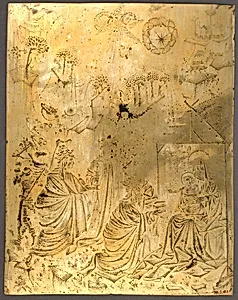
This exquisite copper-gilt plaque, dating to the mid-15th century hails from Germany and forms part of a delicate triptych—a three-panel format popular in medieval devotional art for private altars or portable shrines. Crafted by an unknown artist, its slim profile (just 1/16 inch thick) and shimmering gold surface exemplify the era's metalwork mastery, where copper was engraved, chased, and gilded to mimic precious metals, making religious imagery accessible to the devout laity. Likely depicting angels—a common motif symbolizing divine messengers—the plaque reflects late Gothic sensibilities in German medieval art, blending intricate detailing with spiritual fervor. Triptychs like this allowed wings to fold protectively over a central scene, fostering intimate prayer. Its survival speaks to the craftsmanship of workshops in regions like the Rhineland, where such objects bridged ecclesiastical luxury and personal piety. Now in the Metropolitan Museum of Art's Medieval Art collection, thanks to the 1890 bequest of Mrs. A. M. Minturn, this fragile treasure (8 9/16 x 6 3/4 inches for the central panel) invites visitors to ponder the glow of faith in flickering candlelight, a testament to 15th-century artistry.