
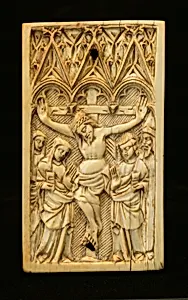
Plaque
1400-1500
Medium
Decorative Arts
Classification
Decorative Arts
Department
Smithsonian Collection
Museum
Smithsonian American Art Museum
Credit
Smithsonian American Art Museum, Gift of John Gellatly
Accession Number
1929.8.240.10
Rights
Public Domain
Tags
Art Historical Context
This exquisite 15th-century plaque crafted by the artist Smillies, captures the poignant scene of the Crucifixion a central motif in medieval Christian devotion. Dating to around 1400–1500, it exemplifies decorative arts from the late Gothic period, when such plaques served as personal aids for prayer, altarpiece elements, or cherished household objects. Smillies, active during this era of transition toward the Renaissance, contributed to a tradition where religious imagery blended spiritual intensity with refined craftsmanship. The plaque's significance lies in its role as a portable emblem of faith, reflecting the era's deep piety amid Europe's religious upheavals. Decorative arts like this—often in materials such as ivory, wood, or metal—highlighted technical virtuosity in carving, gilding, or enameling, making sacred narratives accessible beyond grand cathedrals. Today, it resides in the Smithsonian American Art Museum, thanks to the generous gift of collector John Gellatly, whose bequest enriched American holdings with European treasures. Visitors will appreciate how this modest yet powerful piece bridges personal spirituality and artistic heritage, inviting quiet reflection on timeless themes of sacrifice and redemption.