
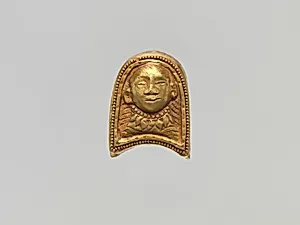
Plaque with Head
Unknown Artist
7th–9th century
Medium
Gold
Dimensions
H. 1 5/8 in. (4.1 cm); W. 1 in. (2.5 cm)
Classification
Metalwork
Culture & Period
China (Xinjiang Autonomous Region, Central Asia) · Period of Tibetan Empire
Department
Asian Art
Museum
Metropolitan Museum of Art, New York, NY
Credit
Purchase, The Vincent Astor Foundation Gift, 2002
Accession Number
2002.556.11
Rights
Public Domain
Tags
Art Historical Context
This exquisite gold plaque, titled *Plaque with Head*,ails from China's Xinjiang Autonomous Region in Central Asia during the Period of Tibetan Empire (7th–9th century Measuring just 1 5/8 inches high 1 inch wide, delicate metalwork piece exemplifies the fine craftsmanship of a crossroads culture, where Tibetan, Central Asian, and Chinese influences converged along the Silk Road. Likely worn as a personal ornament or sewn onto clothing, its small scale highlights the portability and prestige of such treasures in nomadic or imperial societies. Crafted from pure gold, the plaque's creation reflects advanced metalworking techniques of the era, such as hammering, chasing, or repoussé to depict a stylized head—possibly a portrait, deity, or symbolic figure. Gold's rarity and luster symbolized wealth, power, and divine favor, making it a coveted medium for elite artifacts during the Tibetan Empire's expansive reign, which stretched into Central Asia. Today, housed in the Metropolitan Museum of Art's Asian Art Department (purchase from The Vincent Astor Foundation Gift, 2002), this anonymous masterpiece offers a glimpse into forgotten artistic exchanges, reminding us how tiny objects can encapsulate vast historical narratives of empire, trade, and cultural fusion.