
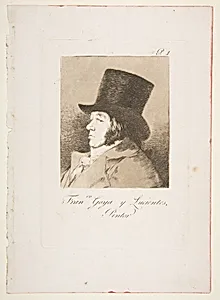
Plate 1 from "Los Caprichos": Self-portrait
Medium
Etching, aquatint, drypoint and burin
Dimensions
Plate: 8 9/16 in. × 6 in. (21.8 × 15.2 cm) Sheet: 11 5/8 x 8 5/16 in. (29.5 x 21.1 cm)
Classification
Prints
Department
Drawings and Prints
Museum
Metropolitan Museum of Art, New York, NY
Credit
Gift of M. Knoedler & Co., 1918
Accession Number
18.64(1)
Rights
Public Domain
Tags
Art Historical Context
Francisco de Goya y Lucientes, a pioneering Spanish artist of the late Enlightenment, opens his groundbreaking series *Los Caprich* (1799) with this striking self-portrait as Plate1. Created amid Spain's social and political turmoil—including the artist's own recent deafness and disillusionment with superstition and folly—*Los Caprichos* 80 prints that boldly satirize human vices, clerical corruption, and irrationality. By leading with his own likeness, Goya positions himself as both creator and critic, inviting viewers into a world of dark humor and moral commentary. Masterfully executed in etching, aquatint, drypoint, and burin on a modest plate (8 9/16 × 6 in.), this print showcases Goya's innovative printmaking prowess. Etching provides precise lines, aquatint yields velvety tonal depths for moody shadows, drypoint adds expressive burrs, and the burin refines details with crisp elegance. These techniques, rare in combination at the time, allowed Goya to achieve painterly richness in reproduction, making his critiques accessible beyond elite patrons. Housed in the Metropolitan Museum of Art's Drawings and Prints department (gift of M. Knoedler & Co., 1918), this self-portrait endures as a testament to Goya's transition from court painter to Romantic visionary, influencing modern art's unflinching gaze at humanity's flaws.
About the Artist
Goya (Francisco de Goya y Lucientes)|Goya (Francisco de Goya y Lucientes) · 1746–1828
Francisco José de Goya y Lucientes (1746-1828) was a Spanish painter and printmaker considered the last of the Old Masters and the first of the moderns. Rising from modest provincial origins to become First Court Painter to Charles IV, Goya's career spanned the Enlightenment's optimism and the brutal Napoleonic invasion that shattered it. A mysterious illness in 1793 left him permanently deaf and ...