
Plate
19th century
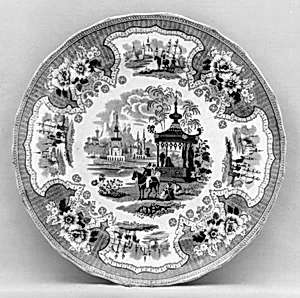
Medium
Pottery
Dimensions
Diameter: 9 3/8 in. (23.8 cm)
Classification
Ceramics-Pottery
Culture
British, Staffordshire
Department
European Sculpture and Decorative Arts
Museum
Metropolitan Museum of Art, New York, NY
Credit
Bequest of Mary Mandeville Johnston, from the collection of Mr. and Mrs. Edward W. S. Johnston, 1914
Accession Number
14.102.262
Rights
Public Domain
Tags
Art Historical Context
This charming 19th-century pottery, crafted by William Adams of Staffordshire, England, exemplifies the region's renowned tradition of mass-produced decorative ceramics. Staffordshire potteries, including Adams' works, revolutionized affordable tableware and ornaments through innovative techniques like transfer printing, which allowed intricate designs to be replicated efficiently on earthenware. Measuring just 9 3/8 inches in diameter, this piece from the Metropolitan Museum of Art's European Sculpture and Decorative Arts was a staple in middle-class British and American homes, blending utility with artistry. The plate's surface likely features a lively transfer-printed scene incorporating buildings, men, flowers, and horses—common motifs in Staffordshire ware that evoked pastoral idylls or everyday rural life. These vivid, multicolored decorations highlighted the potters' skill in capturing narrative detail, making everyday objects feel like miniature paintings. Adams, a prominent figure in the Staffordshire industry, contributed to its global export boom during the Victorian era, when such pottery symbolized refined taste amid the Industrial Revolution. Bequeathed to the Met in 1914 by Mary Mandeville Johnston from the collection of Mr. and Mrs. Edward W. S. Johnston, this plate offers a window into 19th-century domestic culture, where ceramics bridged art and daily life. Visitors, imagine it gracing a Victorian sideboard, alive with stories in clay!