
Plate
ca. 1760
Medium
Soft-paste porcelain
Dimensions
Diameter: 9 1/4 in. (23.5 cm)
Classification
Ceramics-Porcelain
Culture
French, Chantilly
Department
European Sculpture and Decorative Arts
Museum
Metropolitan Museum of Art, New York, NY
Credit
Gift of Mrs. Morris Hawkes, 1924
Accession Number
24.214.16
Rights
Public Domain
Tags
Art Historical Context
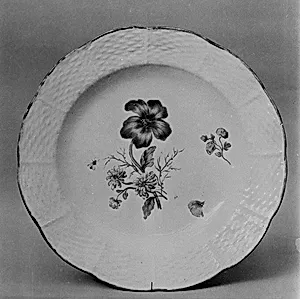
This elegant plate, crafted around 1760 at the Chantilly porcelain factory in France, exemplifies the refined taste of mid-eighteenth-century European decorative arts. Made from soft-paste porcelain—a material developed in Europe to mimic prized Chinese imports—the piece features the luminous white surface and delicate modeling characteristic of Chantilly wares. Produced under the patronage of the Prince of Condé, the factory became renowned for its graceful tableware that blended functionality with artistic beauty. The plate’s floral decoration reflects the period’s fascination with nature and the growing influence of botanical motifs in design. Chantilly artists often drew inspiration from both Eastern and Western sources, applying hand-painted flowers with a light, airy touch that enhanced the porcelain’s creamy glaze. Such pieces were prized in aristocratic households for their ability to elevate everyday dining into an experience of elegance and sophistication. Today, this work in the Metropolitan Museum’s collection offers visitors a glimpse into the technical achievements and cultural aspirations of French porcelain makers before the advent of hard-paste production in Europe. Its modest scale and refined ornamentation continue to speak to the enduring appeal of Chantilly’s artistic legacy.