
Plate
second half 18th century
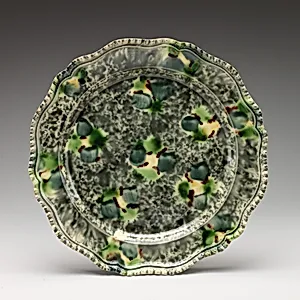
Medium
Earthenware
Dimensions
Diameter: 9 3/8 in. (23.8 cm)
Classification
Ceramics-Pottery
Culture
probably British, Staffordshire
Department
European Sculpture and Decorative Arts
Museum
Metropolitan Museum of Art, New York, NY
Credit
Rogers Fund, 1928
Accession Number
28.184.8
Art Historical Context
This elegant plate exemplifies the "Whieldon type" of earthenware pottery from Staffordshire, England, produced in the second half of the 18th century. Attributed to the innovative style of potter Thomas Whieldon, these pieces are celebrated for their vibrant, mottled glazes—often in tortoiseshell patterns of cream, green, and brown—that mimic more expensive porcelain while remaining affordable for middle-class households. Measuring 9 3/8 inches in diameter, this example showcases the practical yet decorative tableware that fueled Britain's ceramics boom. Staffordshire emerged as a pottery po...
About the Artist
Whieldon type
**Whieldon Type: Pioneers of Colorful Staffordshire Earthenware** Whieldon type pottery represents the work of anonymous Staffordshire potters active in Britain during the mid-18th century, roughly 1740–1770, who produced innovative lead-glazed earthenwares that brought vibrant color and whimsy to everyday tableware and ornaments. Emerging from the fertile pottery district of Staffordshire, these...