
Plate
Unknown Artist
19th century
Medium
Hard-paste porcelain
Dimensions
Diameter: 9 11/16 in. (24.6 cm)
Classification
Ceramics-Porcelain
Culture
German
Department
European Sculpture and Decorative Arts
Museum
Metropolitan Museum of Art, New York, NY
Credit
Gift of Bernhard Heitmann, in honor of Olga Raggio, 2001
Accession Number
2002.41
Rights
Public Domain
Tags
Art Historical Context
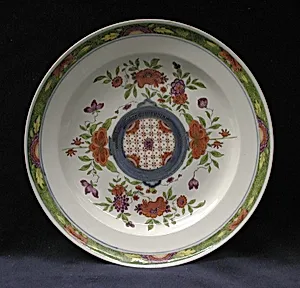
This elegant 19th-century German, crafted from hard-paste porcelain, exemplifies refined artistry of European decorative ceramics. Measuring 9 11/16 inches in diameter, it features delicate floral motifs—a hallmark of the period's porcelain wares—likely hand-painted with vibrant blooms that evoke the natural beauty celebrated in Romantic-era design. Housed in the Metropolitan Museum Art's Department of European Sculpture and Decor Arts, this piece was generously gifted by Bernhard Heitmann in of curator Olga Raggio in 1. Hard-paste porcelain, pioneered in Germany at the Meissen factory in the early 18th century, represented a technological triumph, replicating the translucent purity of coveted Chinese porcelain through a firing process blending kaolin clay and alabaster at high temperatures. By the 19th century, German manufactories like Königliche Porzellan-Manufaktur (KPM) in Berlin perfected this medium, producing tableware that blended functionality with opulent decoration for bourgeois homes and royal tables. As a snapshot of everyday luxury, this plate highlights porcelain's role in 19th-century German culture, where floral patterns symbolized prosperity and the era's fascination with botany. Though the artist remains unknown, its enduring appeal lies in the masterful technique that made such objects both collectible treasures and practical delights.